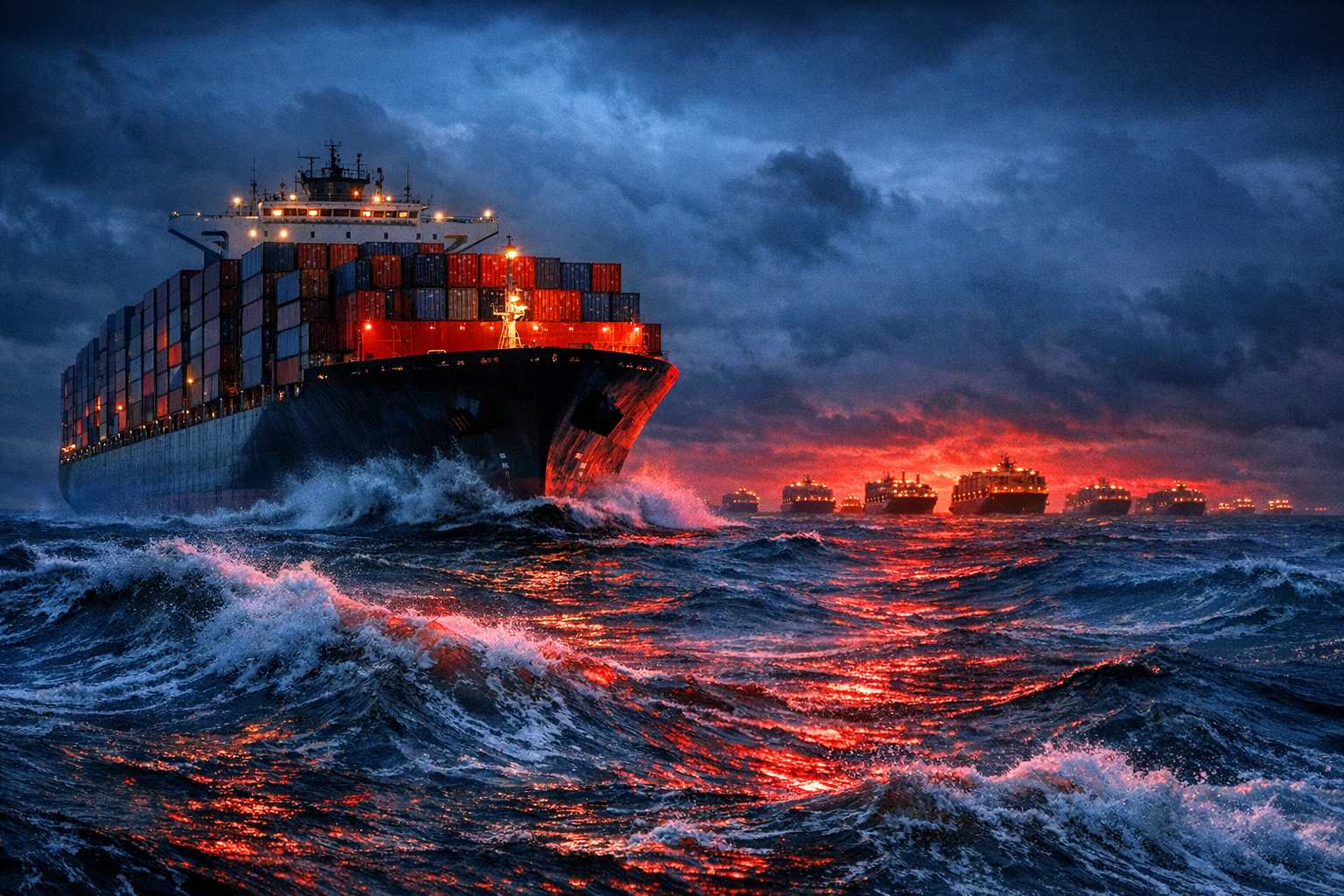
Red Sea Crisis: Australian Freight Costs Soar & Delays Grow
Red Sea attacks are spiking Australian freight costs and causing severe delays. Learn how supply chain disruptions are hitting local exporters today.
Australian small businesses and exporters are facing a fresh wave of supply chain turbulence as the escalating security crisis in the Red Sea begins to inflict significant collateral damage on local trade. While the conflict is centred thousands of kilometres away, the ripple effects are washing up on Australian shores, manifesting in delayed shipments, reduced capacity, and a sharp spike in freight rates.
According to recent reports, major shipping lines are increasingly diverting vessels away from the Suez Canal—a critical artery for global trade—opting instead for the longer, safer route around the Cape of Good Hope in South Africa. This diversion adds thousands of nautical miles and up to two weeks to transit times between Asia and Europe. For Australian exporters, particularly those relying on Asian trans-shipment hubs to get their goods to European markets, the consequences are immediate and costly.
The Trans-shipment Bottleneck
While Australia’s direct shipping lanes to Asia remain relatively secure, the national supply chain is inextricably linked to the global network. The disruption has exposed the vulnerability of Australian exporters who rely on major Asian hubs, such as Singapore and Shanghai, to transfer goods onto vessels bound for Europe and the UK.
With major carriers rerouting their main haul vessels around Africa, schedules at these Asian hubs have been thrown into disarray. The result is a severe capacity crunch. As ships arrive off-schedule or bypass ports entirely to make up time, Australian containers are being left on the docks, facing longer dwell times and uncertain departure dates.
This "trans-shipment trap" means that even if a container leaves Melbourne or Sydney on time, it risks becoming stuck in a logistical bottleneck in Asia. Industry analysts warn that this congestion is likely to worsen before it improves, as the displaced vessels struggle to return to their normal rotations.
Surging Costs and the 'Cape' Premium
For Australian small businesses operating on thin margins, the financial impact is the most pressing concern. The decision to reroute around the Cape of Good Hope consumes significantly more fuel and crew time, costs that shipping lines are passing on to customers in the form of surcharges and general rate increases.
Freight rates on Asia–Europe container routes have already begun to climb, and Australian exporters are not immune to this pricing contagion. Logistics providers are reporting the introduction of emergency risk surcharges and peak season surcharges, even during what would typically be a quieter period for trade.
For marketers and business owners, this equates to a sudden rise in the cost of goods sold (COGS). The unpredictability of these costs makes pricing strategies difficult, forcing businesses to either absorb the hit to their bottom line or pass the increases on to consumers who are already grappling with cost-of-living pressures.
Key Sectors Under Pressure
The disruption is being felt acutely across specific Australian industries that depend heavily on timely access to European markets.
Meat and Livestock: The Australian meat industry, which operates on strict shelf-life timelines, is particularly vulnerable. Chilled meat exports rely on efficient transit to maintain quality and value. The additional weeks added by the Cape diversion, coupled with delays at trans-shipment hubs, threaten to compromise product quality or force exporters to freeze product, significantly reducing its market value.
Wine: Australian wine exporters, many of whom have been working tirelessly to diversify markets and re-establish footholds in the UK and Europe, are facing a new hurdle. The increased shipping costs threaten to erode the competitiveness of Australian vintage in price-sensitive overseas markets, just as the industry seeks to stabilise post-pandemic trade flows.
Manufacturing: It is not just outbound trade that is suffering. Australian manufacturers relying on components from Europe, or exporting finished goods to the region, are facing inventory shortages. The disruption challenges the "just-in-time" manufacturing model, forcing businesses to consider holding larger, more expensive inventories to buffer against uncertainty.
Navigating the Uncertainty
For the Australian logistics and small business community, the situation underscores the fragility of global trade routes. While the security risks remain concentrated in the Red Sea, the interconnected nature of modern shipping means that no trading nation is truly isolated from the fallout.
Experts are advising Australian businesses to maintain close communication with freight forwarders and to budget for continued volatility in both pricing and transit times. Diversifying supply chain routes and reconsidering inventory levels may be necessary strategies as the industry braces for a prolonged period of disruption.
As the situation develops, the resilience of Australian exporters will once again be tested, requiring agility and strategic planning to navigate the treacherous waters of global trade.
Source: Bloomberg - https://www.bloomberg.com/news/articles/2026-01-11/red-sea-crisis-upends-container-routes-hits-australia-asia-europe-trade