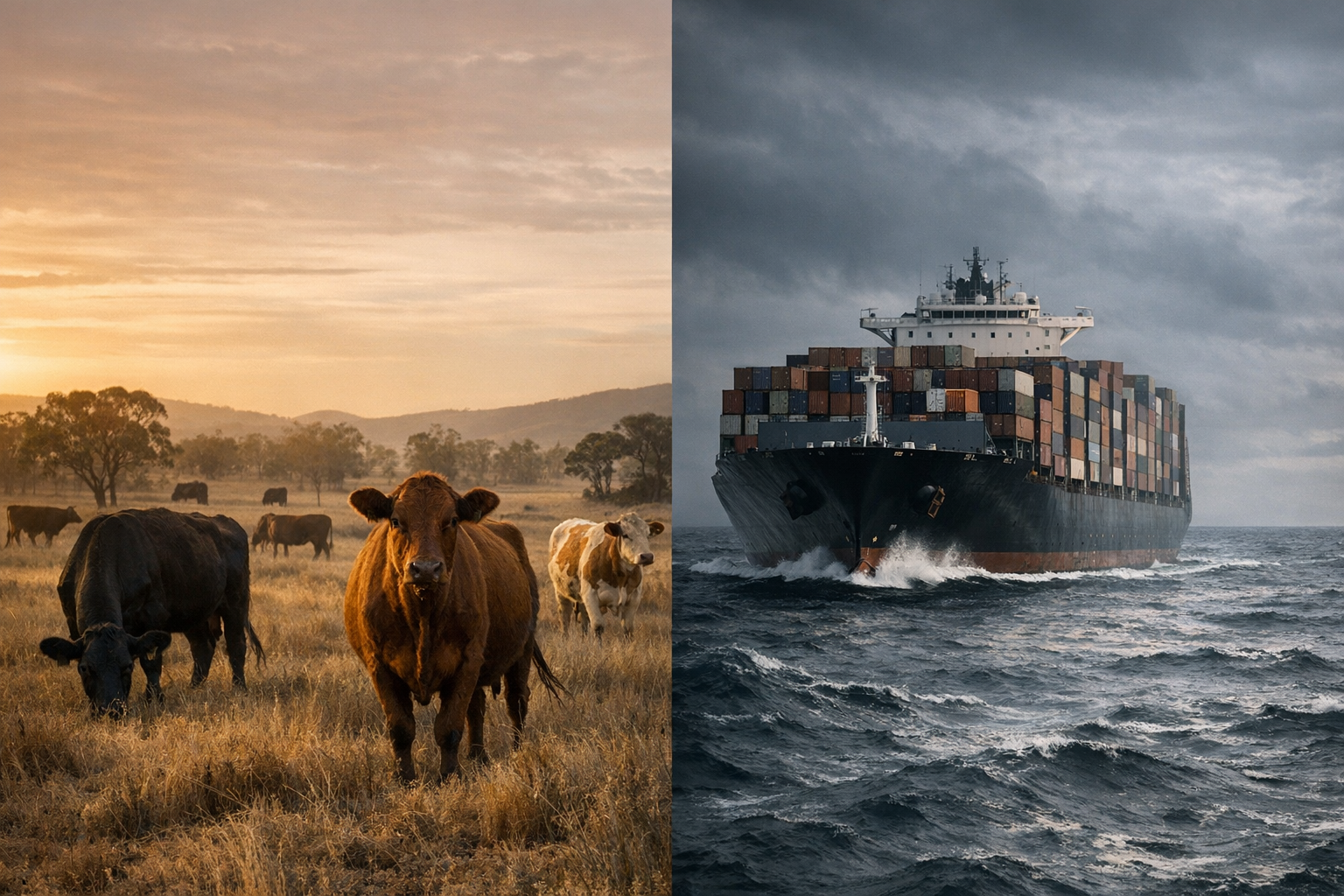
China's 55% Beef Tariff: $1B Blow to Aussie Exports
Australian beef faces a 55% tariff in China as quotas trigger. With $1 billion at risk, read how this massive levy impacts exporters and trade volumes.
A New Year, A New Hurdle for Exporters
For Australia’s agricultural sector, the new year has ushered in a significant economic challenge. As of January 1, Australian beef exports to China are subject to a restrictive new tariff regime that threatens to destabilise one of the nation’s most lucrative trade corridors.
According to reports from Ticker News, China has implemented a massive 55 per cent tariff on Australian beef imports that exceed a newly established duty-free quota. This policy shift is not merely a bureaucratic adjustment; it represents a potential loss of over $1 billion in export revenue and places immense pressure on Australian producers who have spent decades cultivating the Chinese market.
For small businesses, logistics providers, and marketers within the agricultural supply chain, this development signals a need for immediate strategic reassessment.
The Mechanics of the Quota
Understanding the specifics of the policy is crucial for industry stakeholders. The new framework caps duty-free beef exports at 205,000 tonnes annually. This quota is set to remain in place for the next three years.
Under the terms of the Australia-China Free Trade Agreement (ChAFTA), Australian beef has generally enjoyed preferential access to the Chinese market. However, the agreement includes "safeguard" mechanisms allowing Beijing to revert to higher tariff rates if import volumes surge past specific triggers.
With the cap set at 205,000 tonnes—a figure easily reachable given the high demand for premium Australian protein in Asia—any product crossing the border after that limit is reached will be hit with the 55 per cent levy. This effectively renders Australian beef uncompetitive compared to other international suppliers once the quota is exhausted for the year.
Economic Fallout: A Third of Trade at Risk
The financial implications of this policy are stark. Industry modelling suggests that the tariff could reduce trade volumes by up to one-third. In an industry reliant on volume to offset high production and shipping costs, a 33 per cent reduction is catastrophic for margins.
The $1 billion figure cited in reports represents more than just lost sales; it represents a contraction of the broader ecosystem. From regional abattoirs to metropolitan freight forwarders and specialised food marketers, the ripple effect of reduced export volumes will be felt across the Australian economy.
For marketers promoting "Brand Australia," the challenge is two-fold: maintaining premium positioning while prices for the end consumer in China potentially skyrocket due to tariffs, or finding alternative markets for the surplus stock that can no longer enter China duty-free.
Market Share and Competitive Vulnerability
Perhaps the most pressing concern for long-term strategists is the risk of permanent market share erosion. The global beef market is fiercely competitive, with major producers in South America—specifically Brazil and Argentina—and the United States constantly vying for a larger slice of the Chinese pie.
When Australian beef becomes 55 per cent more expensive due to tariffs, Chinese importers are likely to pivot rapidly to cheaper alternatives. Historically, once a supplier loses shelf space and supply chain integration in China, regaining that foothold is incredibly difficult and costly.
There are deep concerns regarding these long-term losses. While Australian beef is marketed on quality, safety, and traceability, price sensitivity in the current global economic climate remains a driving factor for Chinese procurement teams. If Australian exporters are forced to throttle back shipments to stay under the 205,000-tonne cap, competitors will undoubtedly step in to fill the void.
Renewed Trade Tensions?
This policy implementation comes at a delicate time for Sino-Australian relations. Following a period of diplomatic frost intended to be thawing—evidenced by the removal of tariffs on Australian barley and wine—the imposition of the beef tariff raises questions about the stability of the trade relationship.
While the tariff is technically consistent with the safeguard provisions within ChAFTA, the strict enforcement and the volume cap serve as a reminder of the volatility inherent in relying heavily on a single export market. It highlights the fragility of the recovery in trade relations and has sparked concerns regarding renewed tensions between the two nations.
The Path Forward for Aussie Businesses
For the readership of IndiePress—which includes agile exporters and business strategists—the takeaway is clear: diversification is no longer optional; it is a survival imperative.
The cap of 205,000 tonnes means that the "race to the border" will be intense early in the year, followed by a potential cliff-edge drop in exports once the quota is filled. Businesses involved in the trade must prepare for a front-loaded export calendar or pivot their marketing efforts toward emerging markets in Southeast Asia, the UK (following the new FTA), and the European Union.
As the industry braces for the impact of the January 1 changes, the resilience of Australian producers will once again be tested. The focus now shifts to how effectively the sector can navigate this $1 billion hurdle without losing its hard-won reputation as a premier global food supplier.
Source: Ticker News - Australian beef industry warns of major export losses under new China tariff