Taylor Denies Liberal Leadership Challenge Amid Tensions
Shadow Treasurer Angus Taylor denies plotting a coup amidst Liberal Party friction. Read how this impacts political stability and policy direction.
Shadow Treasurer Denies Plotting Coup Amidst Party Room Rumblings
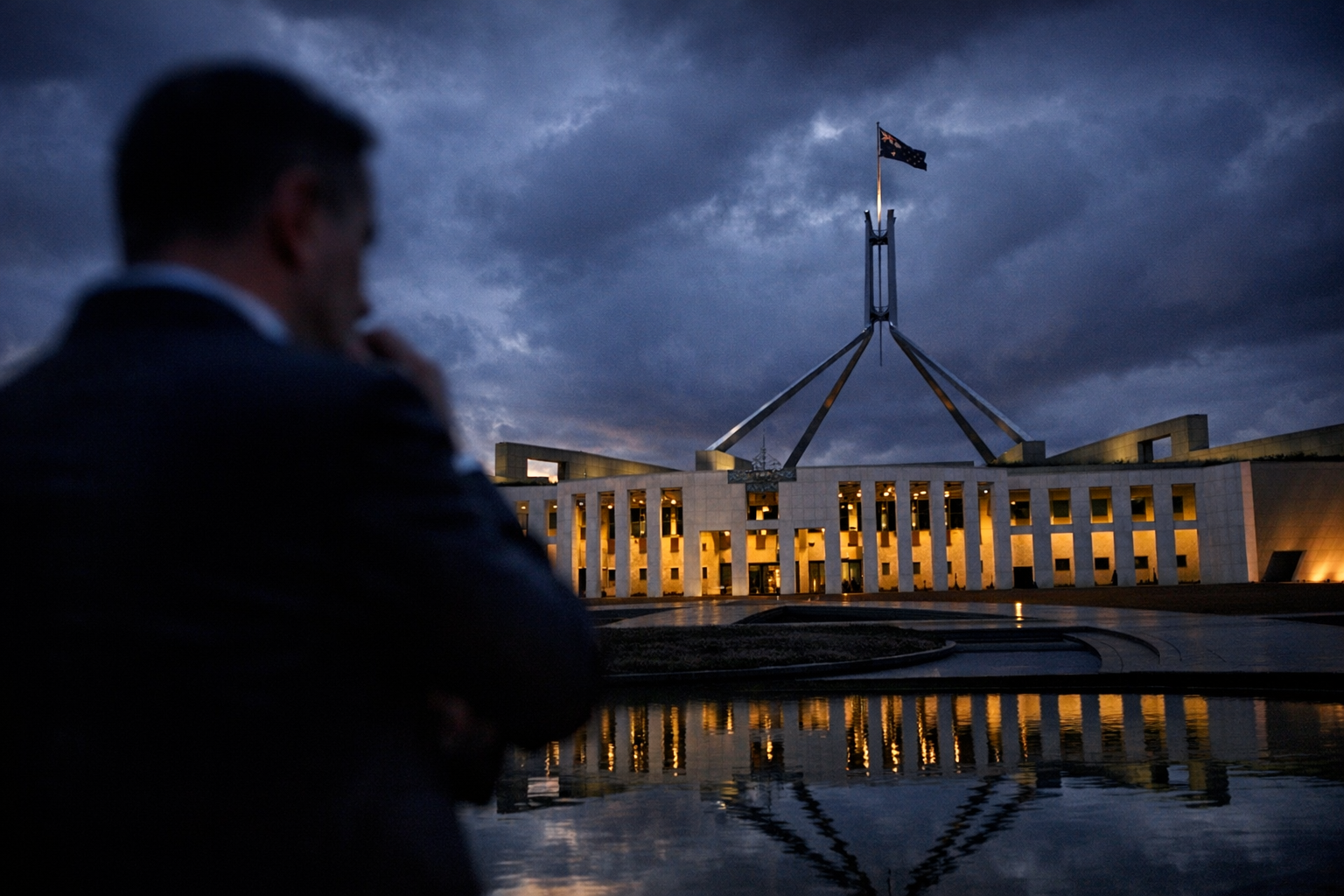
CANBERRA — Senior Liberal frontbencher Angus Taylor has moved swiftly to dampen escalating speculation regarding the stability of the Liberal Party leadership, categorically denying reports that he is preparing a challenge against the current leadership team.
The denial follows a week of intensified background chatter in Canberra, where internal discussions regarding the Coalition’s direction have reportedly spilled over into questions regarding who is best placed to lead the party to the next election. While the political machinations of the capital often feel removed from the day-to-day realities of running a small business, the spectre of leadership instability invariably sends ripples through the market, affecting business confidence and legislative certainty.
The Denial and the Ambition
Addressing the media on Friday, Mr Taylor rejected the premise of a coordinated coup, insisting that his focus remains entirely on his portfolio responsibilities and holding the government to account. The frontbencher characterised the rumours as distractions that do not reflect the mood of the party room.
However, in a move that political analysts suggest is a delicate balancing act, Mr Taylor did not shy away from the question of future aspirations. He acknowledged holding ambitions for the party leadership eventually—a candour that is relatively rare in Australian politics, where standard practice is often to feign a complete lack of interest in promotion until the moment a challenge is called.
By admitting to the ambition while denying the timeline, Mr Taylor attempts to position himself as a loyal lieutenant while signalling to colleagues that he remains a viable alternative should the current leadership's standing deteriorate further. For the party faithful, this is a "watch this space" signal; for the current leadership, it is a reminder that performance is being closely monitored.
Internal Friction and Strategic Direction
The catalyst for these public denials appears to be ongoing internal discussions within the Liberal Party regarding its strategic direction. Sources suggest a divergence of opinion on key policy platforms, potentially involving energy, taxation, or industrial relations—areas of critical interest to the IndiePress readership.
When a party struggles to present a unified front on policy, leadership speculation often fills the vacuum. The current discourse suggests that factions within the Liberals are debating whether a pivot to the right or a move toward the centre is the most viable path to electoral victory. As a prominent figure often associated with the party's conservative wing, Mr Taylor’s name naturally surfaces during such ideological tussles.
The Business Impact of Political Instability
For Australian small businesses and marketers, the re-emergence of leadership speculation is rarely welcome news. The "Canberra Games"—a term often used derisively to describe leadership spills—have historically resulted in periods of policy paralysis.
When a political party, whether in Government or Opposition, turns inward to resolve leadership tensions, external engagement suffers. For the SME sector, which relies on clear signalling regarding tax incentives, workplace laws, and economic grants, political instability creates an environment of hesitation. Investment decisions are often delayed until the political dust settles.
If the Liberal Party descends into a prolonged period of leadership destabilisation, it risks diluting its message on economic management—traditionally the Coalition’s strongest card to play with the business community. A distracted Opposition is less effective at scrutinising government policy, potentially allowing legislative changes that impact small businesses to pass with less rigorous debate.
A History of Challenges
Australian politics has a notorious history of leadership coups, a phenomenon that peaked during the 2010-2018 period. While the major parties have since introduced rules to make leadership challenges more difficult, the culture of replacing leaders to salvage polling numbers remains deeply ingrained in the political psyche.
Mr Taylor’s denial is intended to put a lid on the simmering pot of party room tension. However, history suggests that once the word "coup" enters the media cycle, it is difficult to expunge. The acknowledgement of his ambition, while honest, ensures that his performance and public commentary will be scrutinised through the lens of a potential leadership bid for the foreseeable future.
What to Watch
In the coming weeks, the business community should keep a close eye on two indicators: policy unity and polling data. If the Liberal Party can rally around a cohesive economic message, Mr Taylor’s denial will likely hold, and stability will return. However, if mixed messaging on key business issues continues, the pressure on the current leadership will intensify, regardless of public denials.
For now, the official line stands: there is no challenge, and the party is focused on the job at hand. But in politics, as in business, the situation can change rapidly.
Source: The New Daily - https://www.thenewdaily.com.au/news/politics/australian-politics/2026/02/06/libs-taylor-denies-coup-plan