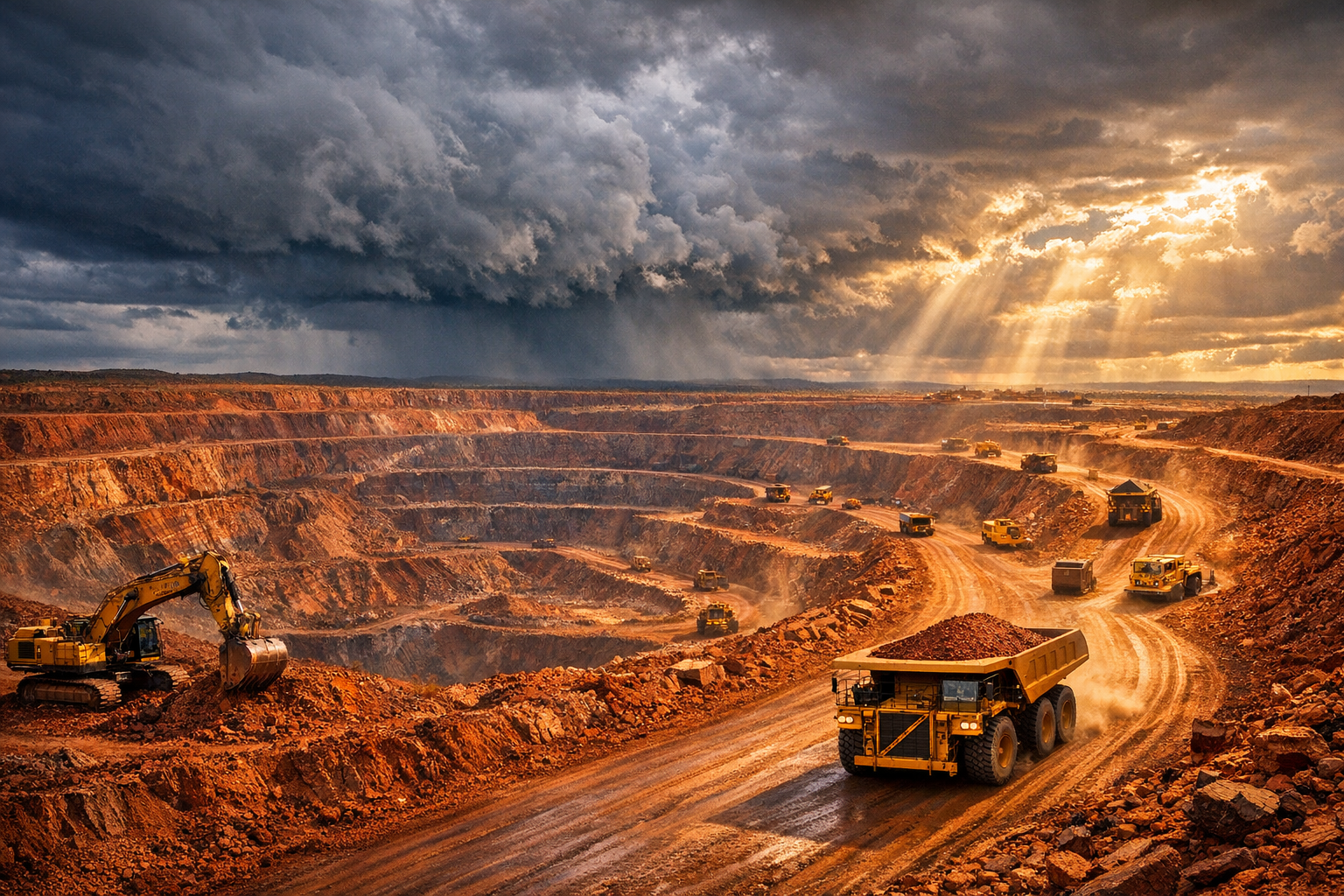
BHP Battles Inflation: Miner Holds Firm on Guidance
BHP flags rising Australian costs but maintains production guidance. Learn how the mining giant battles inflation and labour shortages. Read the update.
The 'Big Australian' Faces Local Cost Pressures
BHP, the world’s largest miner and a bellwether for the Australian economy, has issued a warning to investors regarding the rising cost of doing business on home soil. In a recent update, the resources giant highlighted that inflationary pressures—specifically regarding labour and energy—are weighing heavily on its Australian operations.
Despite these financial headwinds, the company has steadfastly reaffirmed its full-year production guidance. The announcement serves as a critical indicator for the broader Australian business landscape, signalling that even the largest market players are not immune to the persistent inflation that has challenged the national economy over the past twelve months.
For small businesses and marketers observing the top end of town, BHP’s situation underscores a continuing trend: while revenue remains robust due to global demand, the cost of goods sold is climbing, necessitating smarter operational strategies rather than simple volume reduction.
Labour and Energy: The Twin Pillars of Inflation
The mining sector has long been a primary driver of Australian wage growth, often competing aggressively for skilled talent. BHP’s latest alert confirms that the labour market remains exceptionally tight. For the mining giant, this translates to higher wages required to attract and retain the specialised workforce needed for its remote operations.
Furthermore, energy costs have surged. As a significant consumer of power for its extraction and processing facilities, BHP is directly exposed to the volatility in global and local energy markets. These rising input costs are particularly acute in its two flagship Australian commodities: iron ore and coal.
Iron ore, primarily mined in Western Australia’s Pilbara region, remains the company's economic engine. However, the cost to extract each tonne is creeping upward. Similarly, coal operations, largely based in Queensland, are grappling with the same inflationary mix of expensive diesel, electricity, and personnel.
Holding the Line on Production
Perhaps the most notable aspect of BHP’s update is its refusal to downgrade production expectations. In the resources sector, it is not uncommon for companies to lower output targets when costs spiral, focusing only on the highest-margin deposits to preserve profitability. BHP, however, is taking a different tack.
The company has confirmed that its full-year production guidance remains unchanged. This decision suggests a confidence in the underlying robust demand for commodities, but it also places immense pressure on the organisation’s operational efficiency. essentially, BHP is committing to producing the same volume of material, despite it costing significantly more to dig it out of the ground.
The Strategy: Innovation Over Contraction
How does a company absorb rising costs without cutting output? According to BHP, the answer lies in productivity initiatives and technology investments.
Rather than retreating, the company intends to leverage its capital investments in automation and data analytics to offset the inflationary bite. This strategy is particularly relevant for the IndiePress readership. It demonstrates a pivot from cost-cutting via austerity to cost-management via innovation.
BHP has been a long-time adopter of autonomous haulage solutions (driverless trucks) and remote operations centres, which allow mines in the Pilbara to be controlled from Perth. The company is likely looking to accelerate similar technologies to decouple production volumes from linear labour costs. By increasing the efficiency of every hour worked and every gigajoule of energy consumed, BHP aims to protect its margins without sacrificing market share.
Implications for the Broader Economy
BHP’s strategy offers a microcosm of the wider Australian economic challenge. The pressures cited by the miner—labour shortages and energy spikes—are the same hurdles facing small manufacturing firms, logistics companies, and even service-based SMEs.
When a giant like BHP flags labour costs, it often signals that wage expectations are rising across the board, forcing smaller businesses to compete harder for talent. Additionally, the company's focus on technology as a deflationary tool highlights a crucial roadmap for Australian business: in a high-cost environment, efficiency is the only sustainable lever for growth.
While the immediate outlook involves navigating narrower margins, BHP’s steadfast production guidance projects a tone of resilience. The message to the market is clear: the cost of doing business in Australia has gone up, but the 'Big Australian' is prepared to innovate its way through the inflation.
Source: Financial Times - https://www.ft.com/content/bhp-higher-costs-australian-operations-production-guidance-2026-01-10